Concrete Surfaces Cleaned Back to Their Base Color
Sidewalk pressure washing in Waynesville for commercial and municipal concrete showing oil staining, algae, or heavy traffic buildup
Commercial concrete accumulates a layered record of its use—oil drips from vehicle traffic, algae spreading from adjacent landscaped beds, and general grime pressed into the surface by foot traffic over time. TruePeak Exterior Solutions uses commercial-grade pressure equipment to strip that buildup from sidewalks and concrete surfaces at commercial properties and municipal locations in Waynesville and Buncombe County. For retail storefronts, office entries, and gas station aprons where customer-facing appearance is a direct part of daily operations, visibly stained or slick concrete is a functional problem, not just a cosmetic one.
Concrete tolerates substantially higher pressure than wood or composite surfaces, which means the crew can apply detergents, agitate stubborn staining mechanically, and rinse completely without the material-damage risk that governs softer surface work. Oil staining in particular—which does not respond to water pressure alone—requires a degreasing agent applied with dwell time before the surface is pressure rinsed. TruePeak also accommodates after-hours scheduling for commercial properties that operate during standard business hours and cannot have foot traffic interrupted during the work; after-hours service carries a premium upcharge and is confirmed at booking.
Set up a site walk to review the concrete scope and confirm whether after-hours scheduling fits your property's operating pattern.
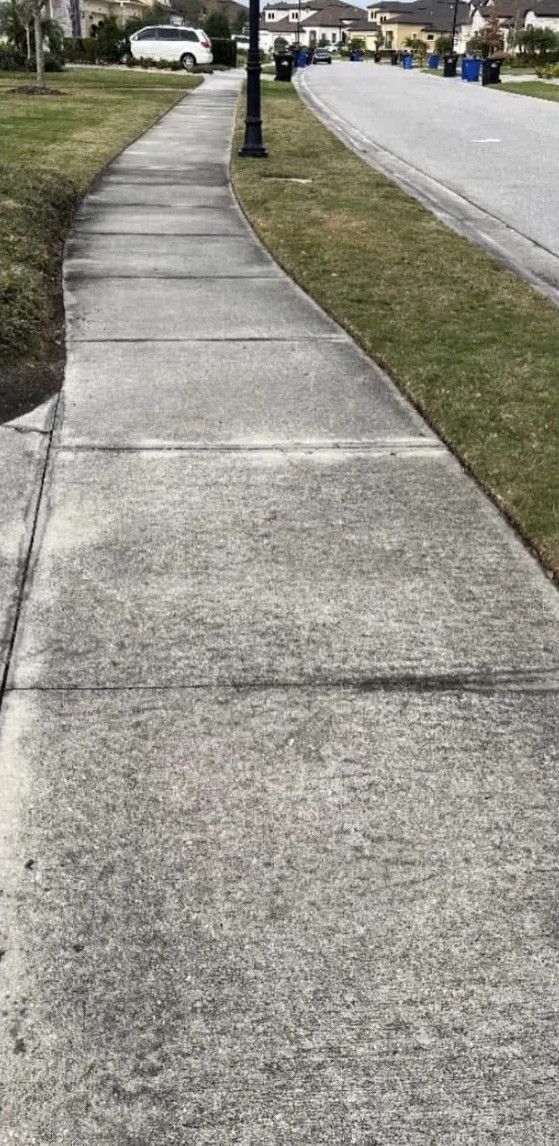
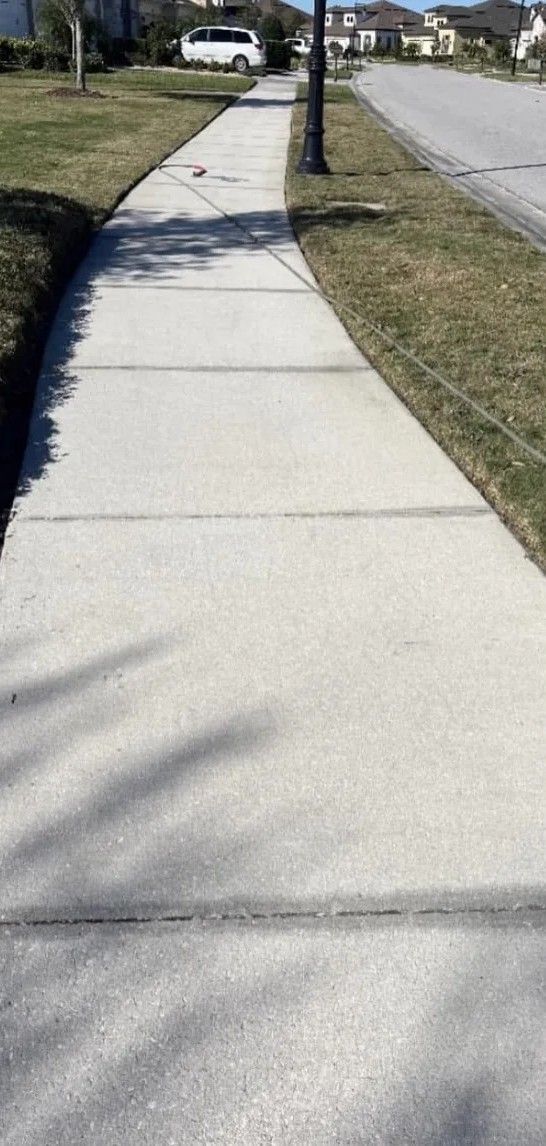
How Sidewalk Cleaning Addresses Oil, Algae, and Embedded Buildup
The sequence of the work matters for concrete cleaning. Applying detergent or degreaser before any pressure is used allows the agent to penetrate the pore structure of the concrete and break the bond between the staining compound and the surface. Rinsing without this step first moves surface material but leaves the embedded layer in place, and the stain reappears as the concrete dries. TruePeak applies the appropriate solution type—degreaser for oil-bearing stains, algaecide for biological growth—lets it dwell, and then uses commercial-grade pressure to flush the broken-down material completely from the surface.
Once the concrete is fully rinsed and dry, the change is clearly visible: oil staining fades back to the base concrete color rather than showing as a dark irregular patch; algae that had turned the surface green or black is gone; and the surface texture that the original pour produced—whether broom-finished or exposed aggregate—is readable again instead of obscured under buildup.
For storefronts and entry walks where foot traffic generates slip risk from wet algae growth, the restored surface texture also means substantially more grip underfoot.
TruePeak works with retail, office, and gas station properties where sidewalk scope varies from a single entry walk to full perimeter curb and apron cleaning. The commercial-grade equipment the crew uses is sized for larger surface areas and does not require multiple passes at lower output to cover extended runs of concrete, which keeps after-hours work efficient for properties where time outside operating hours is limited.
Questions Before Starting Your Project
The questions below address how sidewalk and concrete pressure washing is performed, what surface conditions affect the approach, and what you can observe once the work is finished.
What type of equipment is used for commercial sidewalk pressure washing?
TruePeak uses commercial-grade pressure equipment rated for concrete surfaces, which delivers higher output volume and pressure than residential units and allows larger surface areas—full entry walks, aprons, and curb runs—to be cleaned efficiently in a single appointment.
How is oil staining on concrete treated differently from algae or general grime?
Oil staining requires a degreasing agent applied directly to the stain with sufficient dwell time before any pressure is applied, because water and pressure alone cannot break the bond between oil compounds and the concrete pore structure; algae responds to algaecide or sodium hypochlorite solution, and general grime is addressed with detergent and mechanical agitation.
Why is pre-treatment with detergent important before pressure rinsing concrete?
Applying pressure without pre-treatment moves surface-level material but leaves embedded compounds in the concrete pores; pre-treatment breaks down the staining agent first, so the rinse step flushes loosened material completely rather than redistributing it across the surface.
How does after-hours scheduling work for commercial properties in Waynesville?
Properties that operate during standard business hours can schedule sidewalk washing during off-peak times—early morning or evening—so foot traffic is not interrupted; after-hours service is available with a confirmed premium upcharge and is arranged at the time of booking.
What does correctly cleaned concrete look like once it is dry?
Oil patches return to the base concrete color uniformly; algae-covered sections recover the gray or tan tone of the original pour; and the surface finish—broom-finish lines or exposed aggregate texture—becomes clearly visible again rather than smoothed over by layered grime.
TruePeak Exterior Solutions also pressure washes sidewalks in Asheville, Black Mountain, Canton, Maggie Valley, and Clyde. To confirm the scope, surface conditions, and scheduling options for your
commercial property, call TruePeak at (828)-519-0046 and the crew will walk through the approach before committing a date.